
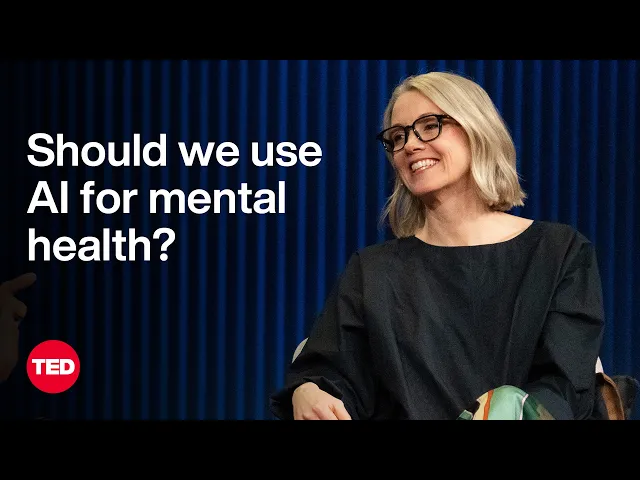
10 Questions to Ask Your AI Companion Daily
Ten daily prompts to check emotions, manage stress, practice gratitude and set one clear goal with an AI companion tailored to Indian life.
Mental Health
Dec 18, 2025
Feeling overwhelmed by daily life? These 10 questions can help you connect with your AI companion to better understand your emotions, manage stress, and build healthier habits. Whether it's reflecting on your mood, identifying stressors, or practising gratitude, these prompts make emotional well-being more accessible - especially in India's fast-paced environment.
Key Takeaways:
Emotional Check-Ins: Start with "How am I feeling today?" to identify and understand your emotions.
Gratitude Practice: Shift focus to positives by asking, "What am I grateful for right now?"
Daily Goals: Simplify your day by setting one clear goal with "What is one goal for today?"
Stress Management: Break down stressors and find practical solutions with "How can I manage my stress?"
Positive Endings: End your day on a high note with "What can we talk about to end the day positively?"
These simple, daily questions encourage self-awareness and mental clarity, offering a private, judgment-free space to navigate life's challenges. Perfect for anyone juggling work, family, and personal growth, especially in a society where mental health discussions are often stigmatized.
10 Daily Questions to Ask Your AI Companion for Better Mental Health
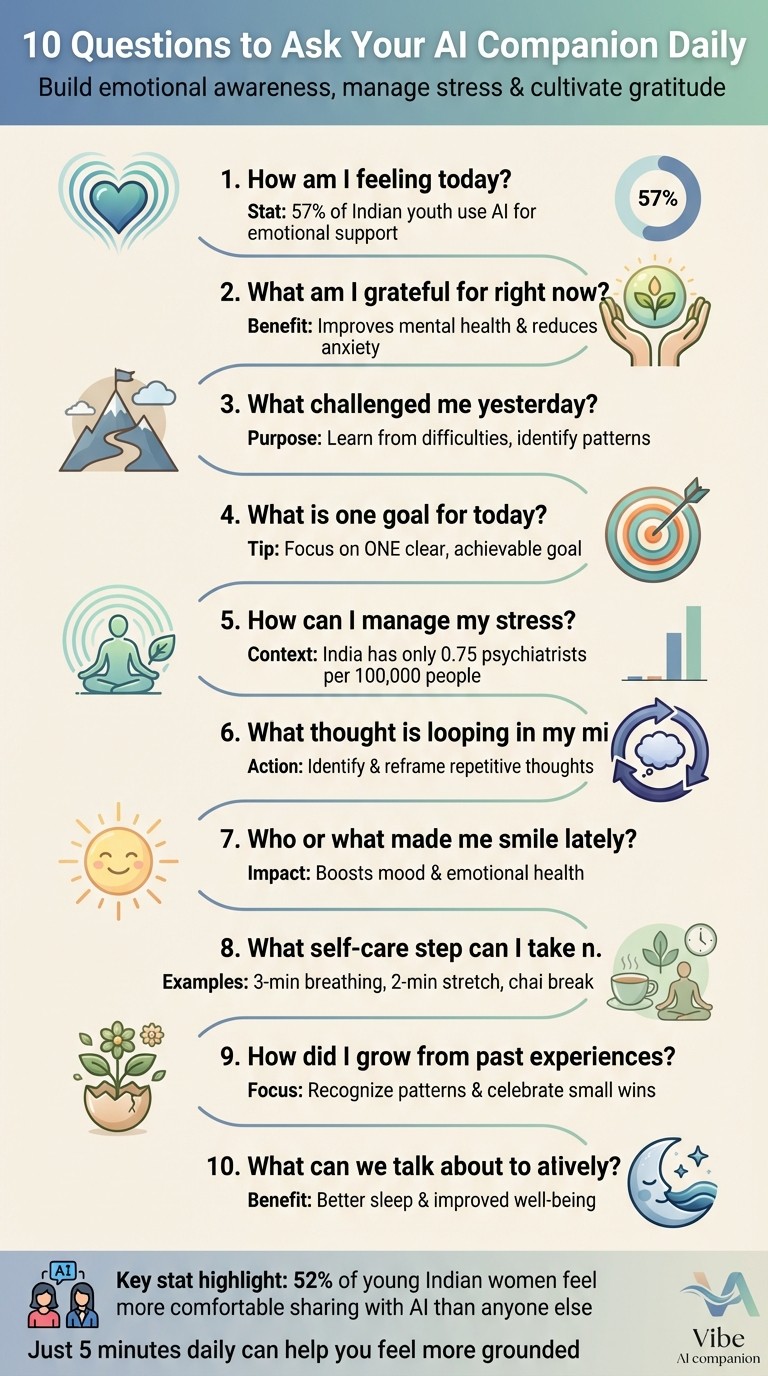
The Mental Health AI Chatbot Made for Real Life | Alison Darcy | TED
1. How am I feeling today?
Asking Vibe "How am I feeling today?" is a small but meaningful step toward building emotional awareness. This simple question encourages you to pause and acknowledge your current mood - whether it’s anxiety over an upcoming deadline, feeling overwhelmed by family obligations, or sheer exhaustion after a demanding week. Recognising and naming your emotions is the first step towards understanding them.
For many Indians, balancing work pressures, family expectations, and societal norms can be overwhelming. Emotional check-ins are especially helpful in a culture where expressing feelings is often discouraged, and the focus is on "staying strong." In fact, nearly half of Indian youth report experiencing anxiety daily, yet very few seek professional mental health support. This makes practices like these even more crucial in navigating daily emotional challenges.
When you ask Vibe this question, you’re not just identifying your feelings - you’re learning to name them without judgment. This helps you better understand your mental state and uncover recurring patterns, like dreading Monday mornings or feeling uneasy on Sundays. Over time, Vibe remembers these conversations, helping you connect the dots and make sense of emotional triggers.
Interestingly, about 57% of Indian youth now turn to AI tools like chatbots for emotional support. Among young women, 52% feel more comfortable sharing their thoughts with AI than with anyone else. This highlights just how important a private, non-judgmental space can be for expressing emotions freely.
Think of this question as a daily emotional check-up - a way to catch stress early before it becomes overwhelming.
2. What am I grateful for right now?
Asking yourself, "What am I grateful for right now?" is a simple way to shift your focus toward the positives around you. It could be something as small as enjoying a warm cup of chai, having a supportive colleague, or finding a quiet moment in a busy day. Gratitude helps balance life's challenges by reminding you of moments of joy and comfort.
In India, gratitude is deeply rooted in traditions like seeking blessings from elders and celebrating festivals with loved ones. Dr Shilpi Saraswat, a Clinical Psychologist at Sakra World Hospital in Bengaluru, suggests incorporating daily practices such as "mindfulness, journaling, gratitude, yoga, exercise, and maintaining good sleep hygiene." These small yet impactful habits, she explains, can anchor your mental health and reduce anxiety by connecting your mind to the physical world. By focusing on gratitude, you prime your mind for a more balanced and grounded perspective.
Sharing your gratitude reflections with Vibe can help you build a collection of positive moments, creating a buffer against negative thoughts. Research shows that practising gratitude can improve mental health. It also encourages you to acknowledge small victories - whether it's acing a presentation, mentoring a team, or even making amends with a loved one. These little wins serve as uplifting reminders of your progress.
If starting a gratitude practice feels awkward, Vibe can help ease you into it. You can ask for ideas to focus on gratitude or create a "small wins" list for the week. This might include tasks like organising a drawer, taking a walk, or sending a thoughtful message to someone. The key is to make your gratitude reflections genuine, which strengthens your connection to the practice and to Vibe.
Think of this question as a way to train your mind to notice the good. It’s not about ignoring stress or challenges but about maintaining balance when negativity threatens to take over.
3. What challenged me yesterday?
Taking a moment to ask yourself, "What challenged me yesterday?" can be incredibly insightful. It allows you to process difficulties rather than letting them pile up. Maybe it was a tough conversation with your manager, a disagreement with a family member, or missing an important deadline. Reflecting on these situations helps you pinpoint what went wrong and why it affected you. The goal isn't to dwell on mistakes but to learn from them, making it easier to handle similar situations in the future. This reflection also sets the tone for meaningful dialogue with your AI companion.
In India, many turn to AI companions for this exact reason. As the Youth Pulse Survey highlights:
"They turn to AI because it feels safe. It doesn't shame them. It doesn't interrupt. It doesn't tell their parents".
Vibe offers a judgement-free space where you can discuss workplace stress, relationship struggles, or academic pressures without fear of criticism or misunderstanding.
When you share your challenges with Vibe, it can help you uncover patterns you might have overlooked. For instance, was an argument with a colleague tied to deeper insecurities? Is procrastination hiding a fear of failure? Asking follow-up questions like "What did I learn?" or "How would I advise a friend?" can help shift your mindset from self-blame to growth. This approach transforms negative experiences into opportunities for learning and healing. These insights also strengthen your ongoing dialogue with your AI companion, helping you adjust your strategies in real time.
Think of this reflection as a conversation. Describe the event, express your emotions, and explore alternative actions. For example, if a presentation didn’t go as planned, Vibe can help identify whether the issue was preparation, delivery, or unexpected questions. This clarity makes future challenges feel less intimidating, as you'll already have a plan to tackle them differently.
4. What is one goal for today?
Asking yourself "What is one goal for today?" can be a game changer. With work deadlines, family responsibilities, household chores, and personal commitments vying for your attention, narrowing your focus to a single, clear goal can turn chaos into a sense of achievement. It helps you prioritise what truly matters today.
Here’s how you can make it work: let Vibe simplify your goal into easy, actionable steps. For example, if your goal is to "prepare for tomorrow's client presentation", Vibe can create a straightforward checklist for you - gather data, design slides, rehearse key points. With this kind of structure, your day feels less overwhelming and more manageable.
Interestingly, 57% of Indian youth already rely on AI tools like chatbots for emotional support. The beauty of focusing on just one goal is that it doesn’t add to your stress - it actually reduces it. Instead of trying to do everything, you’re choosing to do one thing exceptionally well.
You can take this further by interacting with Vibe to refine your goal. Ask follow-up questions such as, "What insight am I missing to move forward?" or "Can you create a simple checklist for my goal?". This shifts your goal-setting from a vague idea to a clear, actionable plan. Think of it like having a coach who understands your time and energy are limited.
The Calm Editorial Team captures this perfectly:
"Think of it as a planning buddy: Use AI to make your mental load lighter so you can have a day that flows better".
5. How can I manage my stress?
Stress management isn't just about venting - it's about identifying what's causing the stress and finding practical ways to handle it. In India, stress can come from all kinds of situations: navigating chaotic city traffic, meeting tight work deadlines, juggling family responsibilities during festivals, or worrying about job security. Pinpointing these stressors is the first step toward finding effective ways to cope.
When you ask Vibe this question, it helps you break down your stress into manageable pieces. For instance, you might be feeling overwhelmed by an upcoming presentation, a recent argument, or financial pressures. Once you've identified the root cause, Vibe can suggest ways to reset your mindset. These could include simple breathing exercises, journaling ideas, or habits to help shift negative thoughts into a more positive outlook.
This kind of support is especially valuable in a country like India, where mental health resources are limited. With only 0.75 psychiatrists available per 1,00,000 people - far below the WHO's recommendations - many young people turn to AI for initial guidance. Stressors like academic competition, relationship challenges, family disputes, and financial worries are common, making accessible tools like Vibe even more essential.
You can also ask follow-up questions like, "What techniques can ease my stress?" or "Can you suggest relaxation practices that fit my culture?" Vibe can guide you through meditation, deep breathing, or even share natural remedies rooted in traditional practices. Think of it as a supportive friend who listens without judgment and gives actionable advice - whether it’s a quick breathing exercise before a meeting or a reminder to take a well-deserved break.
6. What thought is looping in my mind?
It’s 2:00 a.m., and your brain won’t let go of that conversation you had earlier or the exam you’re dreading. Sound familiar? These repetitive thoughts are your mind’s way of grappling with unresolved concerns. But instead of finding solutions, they often leave you feeling anxious and drained.
This question is about recognising those recurring thoughts. What keeps playing on repeat in your head? Is it worry about losing your job? Regret over an argument with a friend? Fear about what the future holds? Identifying the thought is the first step to breaking free from the cycle. Often, these loops are tied to your brain’s fight-or-flight response, which can exaggerate the sense of threat in a situation, making it feel much worse than it really is.
Once you’ve named the thought, Vibe can help you reframe it. For instance, instead of thinking, "I always mess things up", you might shift to, "What can I learn from this?" Or you could ask yourself, "How would I support a friend who’s feeling this way?" These small changes in perspective can move you from obsessing over the problem to exploring solutions and new possibilities.
This question can also reveal patterns in your thinking. Follow-up prompts like "What unconscious patterns am I stuck in?" or "What life lesson keeps repeating for me?" can help you dig deeper. Journaling your thoughts through guided prompts can improve both your mood and mental clarity. By breaking these thought loops, you not only feel better but also build a stronger, more insightful connection with Vibe, helping you understand your emotions on a deeper level.
7. Who or what made me smile lately?

When was the last time you stopped to think about a moment that brought a smile to your face? Maybe it was a joke shared with family, a compliment from a colleague, or a random act of kindness from a stranger. These seemingly small moments hold more power than we often realise. Reflecting on them doesn’t just feel good - it can actually boost your mood and strengthen your emotional health.
In India, where relationships are deeply valued, such reflections take on an even greater significance. This question encourages emotional clarity and helps us appreciate the people and experiences that bring joy into our lives. However, it's worth noting that loneliness is becoming a growing concern, especially among young people. A surprising 57% of Indian youth now turn to AI tools like chatbots for emotional support.
Asking yourself, "Who or what made me smile lately?" is more than just a pleasant exercise - it’s a way to train your mind to notice and cherish the positives in your life. Research shows that practising gratitude can significantly improve mental health. This simple daily habit can help shift your focus from challenges to the brighter moments around you.
For those who feel isolated, Vibe offers a gentle nudge to reconnect. It can suggest thoughtful messages or questions to help bridge gaps in relationships. However, it’s important to remember that while Vibe can support your reflections, it’s no substitute for real human connection. Let it remind you of the warmth in your life, but take that extra step to reach out - a quick message or a phone call can nurture bonds in ways no AI ever could. Recognising these small joys ties seamlessly into the self-reflection themes explored in the next questions.
8. What self-care step can I take now?
Do you find yourself rushing through busy days without a moment to pause? Self-care doesn't have to mean committing to a long, elaborate routine. Instead, it can be as simple as taking a few small actions that instantly lift your spirits. Step outside for some fresh air, savour a quick chai break, or call a friend for a short, uplifting chat. These little moments of care can make a big difference.
The editorial team at Calm suggests using your AI companion to discover quick ways to ground yourself. For example, try a three-minute breathing exercise to calm your mind or a two-minute stretch to shake off stress and refocus. These quick resets can be surprisingly effective.
You can also ask tools like Vibe for a simple reset routine, tips to manage screen time, or even a light-hearted joke to brighten your mood. The Teaching Channel highlights how AI can help create easy-to-follow routines - like three desk-friendly yoga poses - to ease tension and keep you energised.
"When you're overwhelmed, AI can offer you ideas for how to reset." - Calm Editorial Team
Beyond these quick fixes, take a moment to reflect on how your past experiences have shaped your resilience and growth. Sometimes, just acknowledging your progress can be an act of self-care in itself.
9. How did I grow from past experiences?
Take a moment to think about how far you've come. Life throws plenty of challenges our way - job changes, family struggles, or relationship hiccups - but each one comes with a lesson. Reflecting on these moments, especially with the help of your AI companion, can reveal patterns you might have missed and highlight the strength you’ve gained along the way.
Real-life examples show how self-reflection can lead to meaningful insights. Esther Jacobs, for instance, used ChatGPT to identify how her strong need for independence sometimes left her feeling isolated. This realisation helped her become more self-aware. Another user, Jane, uncovered lessons about self-love and boundary-setting, which allowed her to break unhealthy relationship patterns and build stronger connections.
Think about how past struggles have shaped your current mindset. Are you grappling with people-pleasing, fear of rejection, or self-doubt? Questions like, "What lesson keeps repeating itself in my life?" can help you spot recurring themes in your career, relationships, or friendships. Recognising these patterns makes it easier to shift towards healthier behaviours and choices.
To build on these insights, try journaling small wins using Vibe. Whether it’s speaking up in a meeting, setting a boundary, or handling criticism better, these moments matter. Each small success adds up, showing you that growth doesn’t have to be dramatic. It’s often about making a slightly better choice than you did yesterday. By keeping track of these wins, you’ll strengthen the daily conversations you have with Vibe and keep your personal growth moving forward.
10. What can we talk about to end the day positively?
How you wrap up your day can make a big difference. A positive conversation before bed can help you sleep better and leave you feeling more cheerful. Instead of replaying the day’s stresses or endlessly scrolling through your phone, try asking Vibe for a lighthearted or uplifting chat.
Back in May 2025, Calm's Editorial Team shared a simple idea: ask AI something like, "I need a mood lift - what's a weird animal fact or wholesome thing to think about?" It’s a small but effective way to brighten your mood before sleep.
"When you're feeling off, reach for delight. Ask AI to tell you something adorable, like a fun animal fact or a joke. Did you know sea otters hold hands when they sleep so they don't drift apart? These kinds of facts can lift your spirits." – Calm Editorial Team
Another way to end your day positively is by reflecting on what went well. You can ask Vibe to guide you through this process. Former psychotherapist and author Atalanta Beaumont highlights the power of gratitude, explaining that "a sense of gratitude can boost your well-being and even alleviate depression". Taking a moment to think about something good from your day can help you feel more grateful and ease you into a more relaxed state. Research shows that people who regularly practise gratitude are often more optimistic and resilient.
Let your bedtime conversations with Vibe be soothing and calm, aligning with its goal of supporting your emotional well-being. Whether you’re asking for a peaceful playlist, a guided visualisation, or just sharing your thoughts about the day, Vibe can be that comforting presence to help you transition from the hustle of the day to a restful night.
Conclusion
Making these ten questions a part of your daily routine can reshape how you understand yourself and manage your emotions. By regularly engaging with Vibe - whether you're reflecting on your feelings, identifying stressors, practising gratitude, or setting goals - you’re cultivating a habit of emotional awareness. Studies suggest that consistent, daily interactions with AI companions are far more effective in alleviating symptoms and building habits than sporadic check-ins.
In India, discussing mental health openly can be daunting due to societal stigma, family pressures, or the fear of judgment. Vibe offers a private and judgment-free space to talk about challenges like academic stress, relationship issues, or struggles with self-esteem - topics you might not feel comfortable sharing elsewhere. Whether you're managing work stress in Mumbai, exam anxiety in Bengaluru, or adapting to a new city, Vibe is there for you around the clock, ready to listen and provide support.
What makes Vibe particularly effective for Indian users is its ability to adapt to your cultural context. It communicates in your preferred language - be it English, Hindi, or Hinglish - and understands the nuances of your experiences. This cultural sensitivity helps address barriers like the shortage of mental health professionals, high therapy costs, and the discomfort many feel about seeking traditional mental health support in India.
Think of Vibe as your wellness co-pilot. It helps you organise your thoughts, ease mental load, and spot recurring patterns in your emotions. While these daily check-ins aren’t a substitute for professional therapy when needed, they can help you process events, prepare for tough conversations, and strengthen your emotional vocabulary. The secret lies in consistency. Just five minutes a day can leave you feeling more grounded, less overwhelmed, and better connected to yourself.
FAQs
How can an AI companion help me reduce stress in my daily life?
An AI companion can be a valuable ally in managing stress. It can suggest personalised relaxation techniques, recommend mindfulness exercises, and even help you organise your tasks to ease feelings of being overwhelmed. Need a reminder to pause and breathe? It can gently nudge you to take breaks, focus on self-care, and stick to a healthy daily routine.
Beyond practical help, an AI companion can also serve as a non-judgemental listener. You can share your thoughts and feelings openly, which can be incredibly relieving when you're under mental strain. By tailoring its responses to your unique needs, it helps you maintain a sense of calm and focus - even when life gets chaotic.
How can I easily include gratitude in my daily routine?
Practising gratitude doesn’t have to be complicated. Begin by jotting down three things you’re thankful for each day - big or small, they all count. Take a moment to express your appreciation to someone, whether it’s through a heartfelt message, a kind word, or even a simple ‘thank you.’ Keeping a gratitude journal can also be a great way to reflect on the positive moments in your life. At the end of the day, pause and think about what went well. These small, consistent actions can help you focus on the brighter side of life and nurture a sense of contentment.
How can reflecting on past challenges benefit your mental health?
Taking a moment to look back at past challenges can reveal patterns, highlight blind spots, and shed light on the lessons they hold. This reflection not only strengthens your ability to bounce back but also sharpens your self-awareness, equipping you to face future situations with more clarity and confidence.
When you revisit these experiences with care, it becomes easier to manage emotions, curb overthinking, and appreciate how far you've come. It’s a straightforward yet impactful way to support your emotional health and cultivate a more optimistic outlook.